


- Quran Tajweed
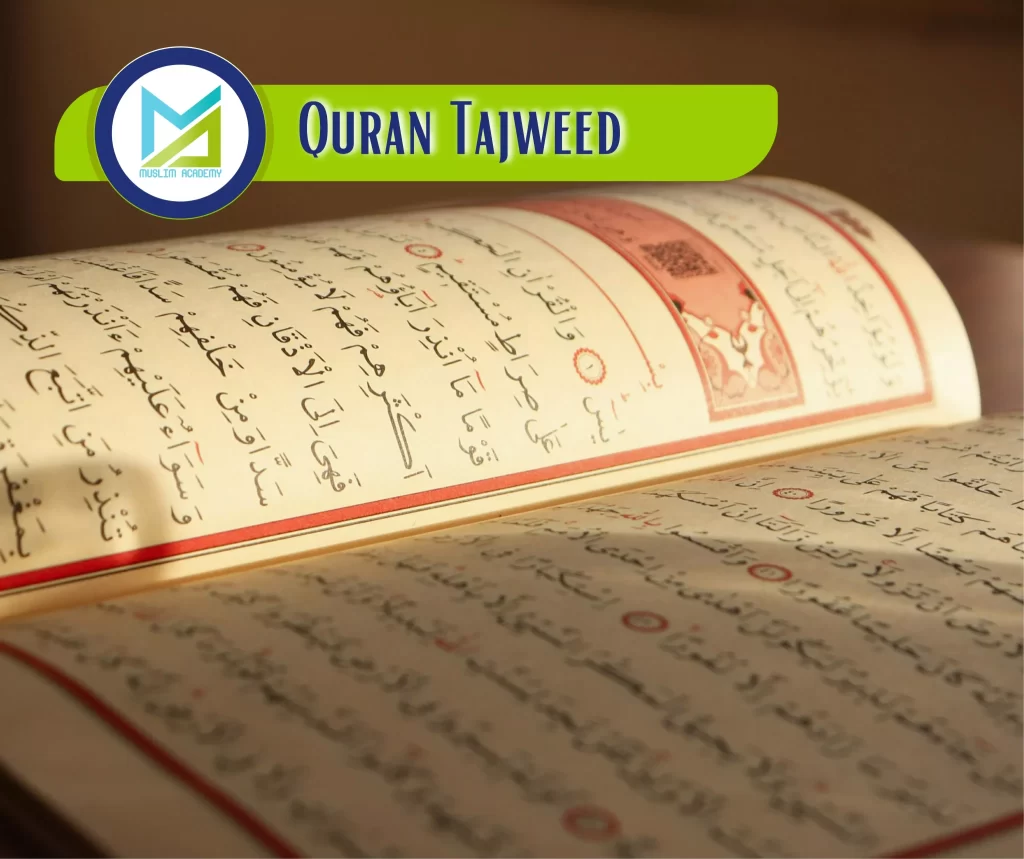
Quran Tajweed with Muslim Academy: The Sacred Science That Brings the Quran to Life Through Correct Recitation
Start Online Quran Classes with Muslim Academy
https://muslimacademy.net/index.php/free-trial/
Sound carries meaning. In everyday speech, mispronouncing a word confuses. In Quranic recitation, mispronouncing a letter can change the meaning of the divine word entirely. This is why Islamic scholars have always regarded correct pronunciation as a religious obligation for every Muslim who recites the Quran — not a bonus skill for advanced students, but a foundational duty that every sincere reciter owes to the sacred text. The science that governs this correct pronunciation has a name: Quran Tajweed with Muslim Academy. It is one of the most precise, most carefully preserved, and most spiritually significant disciplines in all of Islamic learning.
Understanding what tajweed actually involves, why it matters so deeply, and how any motivated Muslim can begin learning it transforms the experience of Quranic recitation from a familiar habit into a genuine, accurate, and spiritually alive engagement with the divine word.
What Tajweed Actually Means
The Arabic word tajweed comes from the root j-w-d, which means to make something excellent, to improve it, or to do it with mastery. In the context of Quranic recitation, tajweed means giving every letter of the Quran its full right — producing each sound from its correct point of articulation, with its proper characteristics, and according to the specific rules that govern its relationship with the letters around it.
This definition reveals something important. Tajweed is not about beautifying recitation in a decorative sense. It is about accuracy — ensuring that the sounds produced during recitation match the sounds that Allah revealed and that the Prophet Muhammad transmitted to his companions. Furthermore, it is about preserving the integrity of the Quran’s oral tradition across generations, maintaining the exact sounds that have been transmitted through an unbroken chain of human voices for over fourteen centuries.
The Major Components of Quran Tajweed with Muslim Academy
Quran Tajweed with Muslim Academy covers several interconnected areas of knowledge, each addressing a different dimension of correct Quranic pronunciation. Together, they form a complete system that governs every sound in the sacred text.
Articulation Points (Makharij Al-Huruf)
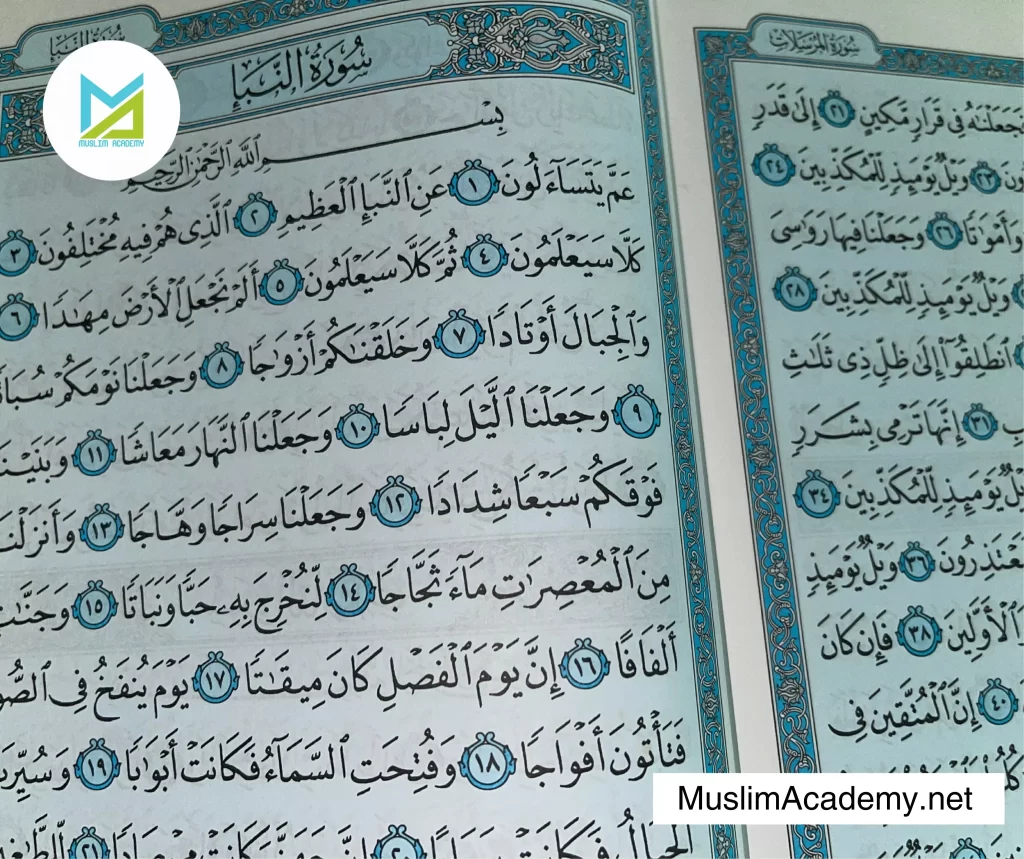
Every Arabic letter has a specific point of articulation — a precise location in the mouth, throat, or nasal passage from which it must be produced. Some letters originate deep in the throat. Others come from the middle of the tongue, the tip of the tongue, the teeth, or the lips. Producing a letter from the wrong point of articulation creates a different sound — and in the Quran, different sounds carry different meanings.
Classical scholars identified seventeen primary articulation points for the twenty-eight Arabic letters. Learning these points requires both theoretical understanding and physical practice. Moreover, developing correct articulation habits takes time and consistent supervised practice, which is why working with a qualified teacher is essential at this stage.
Characteristics of Letters (Sifat Al-Huruf)
Beyond their articulation point, every Arabic letter carries specific qualities — characteristics that define how the sound behaves when produced correctly. Some letters are heavy and deep in quality. Others are light and clear. Some produce a ringing resonance. Others stop the airflow completely. Furthermore, some characteristics are permanent properties of specific letters, while others appear only under certain conditions.
Understanding these characteristics explains why two letters produced from similar points of articulation still sound distinctly different. Mastering them is what separates a reciter who knows the rules theoretically from one who applies them instinctively in flowing recitation.
Rules of Noon Sakinah and Tanwin
One of the most frequently applied sets of tajweed rules governs the behaviour of the letter noon when it carries no vowel (noon sakinah) and the double vowel markers called tanwin. Depending on what letter follows, the noon or tanwin is either fully pronounced, merged with nasalisation, completely assimilated, or converted into a different sound entirely. These four distinct outcomes apply throughout the Quran with remarkable frequency. Consequently, mastering this set of rules has an immediate and visible impact on the accuracy of any student’s recitation.
Rules of Meem Sakinah
Similar rules govern the vowel-less meem. When Meem Sakinah appears before another Meem, a specific merging with nasalisation occurs. Before a ba, the meem sound is hidden with a nasal quality. Before all other letters, it is pronounced clearly and distinctly. These rules are simpler than the noon rules but equally important for correct recitation.
Elongation (Madd)
Arabic vowels can be short or elongated. Tajweed specifies precisely which vowels must be held for two counts, four counts, or six counts, and under what conditions each duration applies. Elongation rules depend on the specific letters involved and what follows them in the text. Applying them correctly gives Quranic recitation its characteristic rhythmic quality — the measured, flowing pace that listeners worldwide recognise as distinctively Quranic.
Heavy and Light Letters (Tafkhim and Tarqiq)
Certain Arabic letters are always pronounced with a heavy, deep quality — a fullness of sound produced by raising the back of the tongue. Others are always light and forward. Several letters shift between heavy and light depending on the vowel they carry or the letters that surround them. This dimension of tajweed gives Arabic its wide tonal variety and the Quran its distinctive sonic texture.
Why Every Muslim Needs to Learn Tajweed
Many Muslims recite the Quran daily in their prayers without ever having formally studied tajweed. Some worry that this makes their recitation religiously invalid. Others assume that tajweed is only for reciters who aspire to the standard of great qaris — the world’s renowned masters of Quranic recitation.
Both of these positions miss an important nuance. Scholars distinguish between two levels of tajweed obligation. The first is the theoretical knowledge of tajweed rules — understanding what they are, how they work, and where they apply. This level is a communal obligation, meaning that it must be sufficiently present within the Muslim community, but not every individual is obligated to master it academically. The second level is practical application — actually reciting the Quran according to tajweed rules in prayer and personal recitation. This level is an individual obligation for every Muslim who recites the Quran.
This means that every Muslim who prays is already obligated to apply tajweed in their recitation, whether they have formally studied it or not. Learning the rules, therefore, is not an optional enrichment — it is the practical path to fulfilling a religious duty that every reciting Muslim already holds.
Additionally, learning tajweed produces a quality of engagement with the Quran that incorrect recitation cannot provide. When a student learns the correct articulation of the throat letters, the precise elongation of the madd vowels, and the distinct nasalisation of the ghunnah, the Quran begins to sound different — richer, more textured, and more alive. Recitation becomes a genuinely physical and spiritual experience rather than a sequence of familiar sounds produced on autopilot.
How to Begin Learning Tajweed
Starting the journey of tajweed study is simpler than many students expect. The key is finding the right teacher, beginning at the right point, and committing to consistent practice.
Find a Qualified Teacher
Tajweed cannot be learned effectively from a book alone. The sounds of Arabic letters must be heard correctly before they can be produced correctly. A qualified teacher models each sound accurately, listens to the student’s attempts, and provides the immediate, precise feedback that is essential for developing correct pronunciation habits. Furthermore, a teacher who holds a recognised ijaza in Quranic recitation transmits not just technical knowledge but a living connection to the chain of scholars who have preserved these sounds since the time of the Prophet.
Begin With the Arabic Alphabet
Students who are not yet confident readers of Arabic script should address this before focusing on tajweed rules. Accurate recitation requires recognising the letters clearly and reading them in connected text fluently. Once solid reading skills are in place, tajweed instruction builds naturally and rapidly on that foundation.
Learn Rules Systematically
A well-structured tajweed course introduces rules one at a time and applies each rule immediately to real Quranic text. Learning the articulation points of all letters before studying any other rules provides the foundation upon which everything else rests. From there, the noon and meem rules, the elongation rules, and the heavy and light letters follow in a logical sequence. Skipping stages or learning rules out of order creates confusion and slows progress significantly.
Practice Daily With the Quran
Theoretical knowledge of tajweed rules becomes a practical skill only through consistent application. Reading the Quran daily — applying the rules just studied to the actual Quranic text — is irreplaceable. Short, focused daily practice sessions produce more durable improvement than infrequent, lengthy sessions. Moreover, reciting regularly in daily prayers with conscious application of correct rules accelerates the development of natural, instinctive tajweed.
Conclusion
The science of Quran Tajweed with Muslim Academy is one of Islam’s most precisely preserved and most spiritually significant disciplines. It connects every Muslim reciter to a living tradition of divine speech transmitted across fourteen centuries without corruption or loss. Learning it is not merely an academic pursuit — it is an act of faithfulness to the sacred text, a fulfilment of religious obligation, and a transformation of the daily experience of reciting the words of Allah.
Every Muslim who commits to learning tajweed — with a qualified teacher, a structured curriculum, and consistent daily practice — discovers that the Quran sounds different when recited correctly. It sounds exactly as it was always meant to sound: precise, alive, and carrying the full weight of its divine origin in every correctly produced syllable.
Start Online Quran Classes with Muslim Academy
https://muslim.bayanews.org/free-trial/

Muslim Academy is an international online and offline academy for all Muslims. It teaches them how to master Quran Recitation, Noorani Qaida, Tajweed, Quran Tafsir, Quran Memorization, Ijazah, Ten Qiraat, Islamic Studies, Arabic Language, and Quranic Arabic.
Get In Touch
- Cairo, Egypt.
- +20 10 06898734
- info@muslimacademy.net
© 2026 All rights reserved to MUSLIM ACADEMY