

- Quran Studies
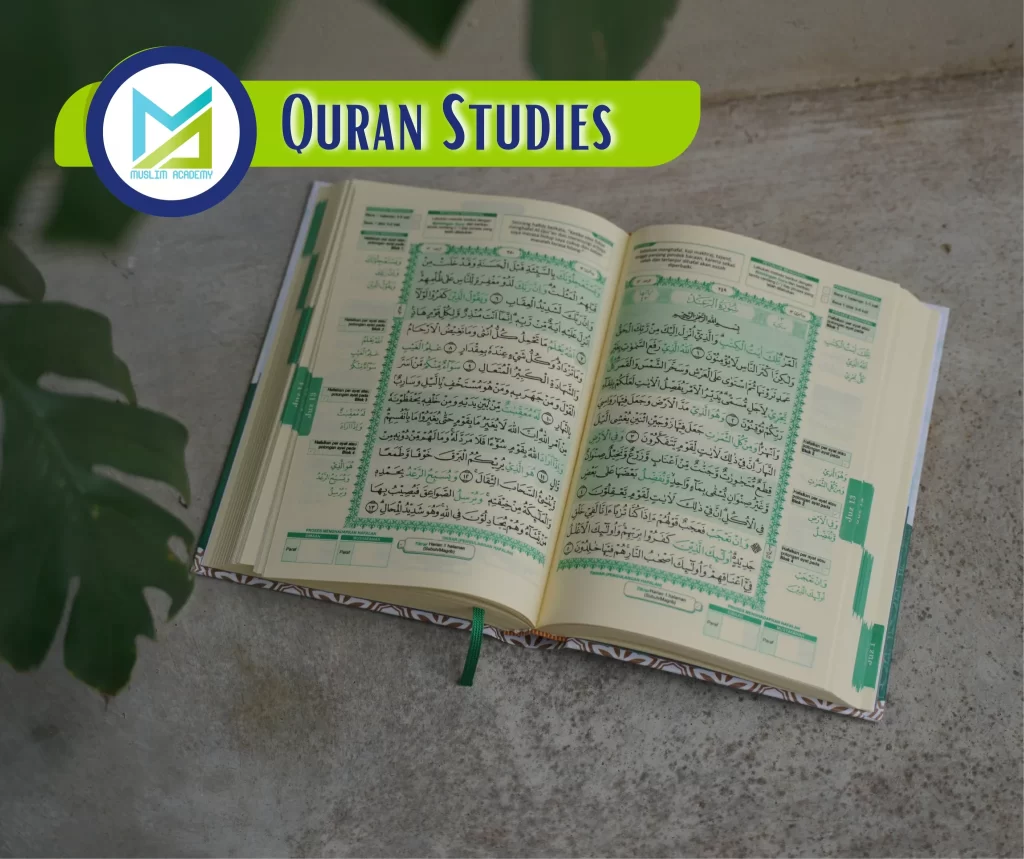
Quran Studies with Muslim Academy: A Lifelong Journey Into the Depths of Islamic Scripture
Start Online Quran Classes with Muslim Academy
https://muslimacademy.net/index.php/free-trial/
Some books reward a single reading. Others reward a lifetime of return. The Quran belongs firmly in the second category — and then exceeds it entirely. Across fourteen centuries, the greatest minds in Islamic civilization have devoted their lives to studying this single text. Grammarians, theologians, legal scholars, historians, and mystics have each approached it from their own angle and found depths sufficient to sustain an entire intellectual tradition. This is what Quran Studies with Muslim Academy truly represents — not a subject to be mastered and set aside, but a living engagement with a text that consistently reveals more to those who return to it with greater knowledge, greater sincerity, and greater humility.
For every Muslim, whether a complete beginner or an advanced scholar, engaging seriously with Quran Studies with Muslim Academy opens dimensions of the faith that surface-level familiarity simply cannot access. Understanding what this field encompasses, how it is structured, and how to begin is the first step toward one of the most rewarding intellectual and spiritual pursuits any person can undertake.
The Branches of Quran Studies with Muslim Academy
The academic and spiritual field of Quranic learning encompasses several distinct but interconnected disciplines. Each one addresses a different dimension of the text — its sounds, its language, its meaning, its history, and its application to human life.
Tajweed — The Science of Correct Recitation
Every serious engagement with the Quran begins with correct recitation. Tajweed is the discipline that governs the precise pronunciation of every letter, the duration of every vowel, and the specific rules for connecting, pausing, and transitioning between sounds within the Quranic text. This is not a peripheral detail — it is the foundation upon which all other Quranic learning rests. A mispronounced letter can alter the meaning entirely. Furthermore, the Quran was designed to be recited aloud, and its full impact — its rhythm, its emotional force, its spiritual weight — only emerges through correct, attentive recitation.
Quranic Arabic
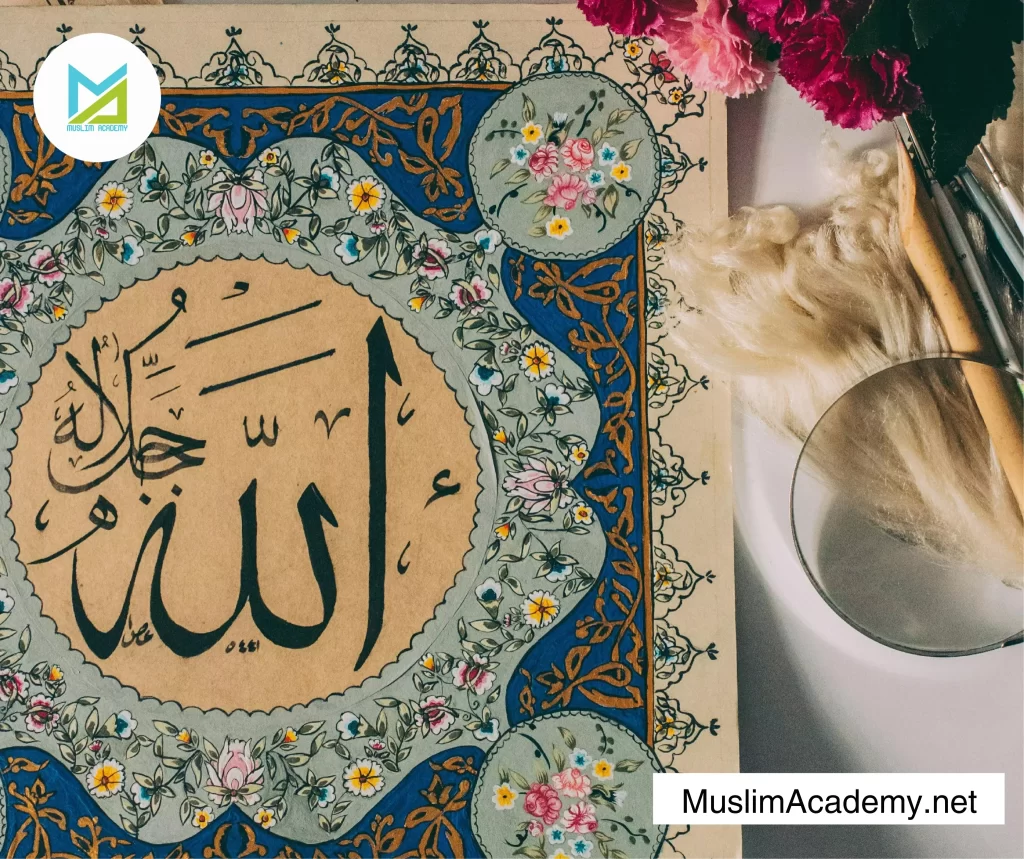
The Quran was revealed in Arabic, and its meaning is inseparable from its original language. Learning Quranic Arabic allows the student to move from reading sounds to encountering meaning directly — without the filter of translation. Even basic knowledge of the most common Quranic roots and grammatical patterns transforms the experience of reading. Moreover, deeper Arabic study opens access to the Quran’s extraordinary literary dimensions — its rhetorical structures, its precise vocabulary choices, and the layers of meaning that skilled translators can only partially convey.
Tafsir — Quranic Interpretation
Tafsir is the science of explaining and interpreting the Quran’s meaning. It draws on Arabic linguistics, the circumstances of each verse’s revelation, the prophetic traditions that illuminate specific passages, and the scholarly consensus that fourteen centuries of Islamic learning have produced. A good tafsir course does not simply tell the student what verses mean — it teaches the student how scholars arrive at meaning and why interpretive precision matters so profoundly.
Ulum Al-Quran — The Sciences of the Quran
This broader discipline covers the entire field of knowledge necessary to approach the Quran with scholarly competence. It includes the history of revelation (wahy), the collection and compilation of the Quran after the Prophet’s death, the multiple modes of recitation (qira’at), the distinction between Makkan and Medinan chapters, the circumstances of revelation (asbab al-nuzul), and the principles of abrogation (nasikh wa mansukh). Together, these subjects provide the contextual framework without which the Quran’s individual passages cannot be understood fully or applied correctly.
Hifz — Quran Memorisation
Memorising the entire Quran — becoming a hafiz or hafiza — represents one of the highest achievements in Islamic education. This is not simply a feat of memory. It is a disciplined spiritual and intellectual practice that requires structured daily effort, systematic revision, and sustained accountability over the years. Consequently, hifz programs form a distinct and demanding branch of Quranic learning that produces individuals who carry the entire scripture in their hearts.
Why Quran Studies with Muslim Academy Matter for Every Muslim
Some Muslims assume that serious Quranic study is the domain of scholars and students at formal Islamic institutions — relevant to imams and academics but not to ordinary believers navigating everyday life. This assumption misunderstands what Quranic education actually produces and what every Muslim genuinely needs.
A Muslim who understands the Quran deeply prays with greater presence. Each recited verse in prayer carries meaning rather than functioning as a sequence of familiar sounds. Every rukoo, every sujood, every moment of standing before Allah gains substance when the words being recited connect to genuine understanding.
Beyond worship, a Muslim grounded in Quranic learning navigates life with a framework that goes deeper than cultural habit or inherited convention. The Quran addresses marriage, commerce, justice, grief, ambition, fear, and gratitude — not in abstract principles alone but in vivid, direct, and personally relevant language. Furthermore, a Muslim who knows the Quran well is far less susceptible to distorted readings of the faith that extract verses from context and apply them in ways that contradict the scholarly tradition.
Parents who invest in Quran Studies with Muslim Academy equip themselves to guide their children’s religious development with genuine competence. Teachers who pursue it bring depth and accuracy to their instruction. Community leaders who ground themselves in it speak from a foundation of real knowledge rather than confident ignorance. In every role a Muslim plays, Quranic literacy makes them more capable, more grounded, and more genuinely useful to the people around them.
How to Approach Quran Studies with Muslim Academy Effectively
Beginning a serious engagement with Quranic learning requires more than good intentions. It requires a realistic plan, the right resources, and the willingness to commit consistently over time. Several principles guide effective engagement with this field.
Start With the Foundation
Correct recitation with tajweed is the entry point into all other Quranic disciplines. Before studying meaning, interpretation, or linguistic structure, a student must be able to read the text accurately and recite it correctly. This foundation takes time to build properly. Rushing past it to reach more intellectually stimulating material produces a fragile understanding built on an unstable base.
Work With Qualified Teachers
Self-study has genuine value in building vocabulary, reviewing grammar, and reading translations. However, certain dimensions of Quranic learning — particularly correct pronunciation and tajweed — cannot be acquired through self-study alone. A qualified teacher hears what the student cannot hear in themselves. They model correct sounds with precision. They transmit the living tradition of Quranic recitation through a personal connection that recorded audio and written textbooks simply cannot replicate.
Engage With Reliable Texts and Resources
The market for Islamic educational materials includes genuine scholarship alongside oversimplified, inaccurate, or ideologically distorted content. Students of Quran Studies with Muslim Academy benefit enormously from guidance in identifying reliable classical and contemporary tafsir works, trustworthy Arabic grammar resources, and reputable institutions whose curricula reflect genuine scholarly standards. A qualified teacher or knowledgeable community scholar can provide this guidance directly.
Read Consistently and Reflectively
Daily reading of the Quran — even a small, consistent amount — builds familiarity, deepens vocabulary recognition, and creates the habitual engagement that transforms abstract learning into lived experience. Pairing this daily reading with regular reflection on meaning — pausing at verses that challenge, comfort, or puzzle — develops the tadabbur (deep contemplation) that scholars have always identified as the heart of true Quranic engagement.
Be Patient With the Length of the Journey
Quran Studies with Muslim Academy is not a course to complete in a semester. It is a lifelong engagement with a text whose depths no single human lifetime has ever fully explored. The greatest scholars in Islamic history described the Quran as always offering more — always rewarding the sincere student who returned to it with greater knowledge and humility than they brought on the previous visit. Approaching the journey with long-term patience rather than short-term urgency produces the quality of engagement the text deserves, and the learner genuinely needs.
Quran Studies with Muslim Academy in the Modern World
Access to serious Quranic education has never been greater than it is today. Traditional institutions — Al-Azhar in Egypt, Dar Al-Uloom Deoband in India, the Islamic University of Madinah — continue to train scholars in the full range of classical Quranic disciplines. Additionally, online platforms now extend high-quality instruction to learners in every corner of the world.
A student in a small town in Australia, a professional in suburban Germany, or a new Muslim in rural Canada can now access structured, certified tajweed instruction, guided tafsir study, and Quranic Arabic courses through platforms that connect them with qualified scholars via live video sessions. This democratisation of access represents one of the most significant developments in the history of Islamic education — making a tradition of learning that was once geographically restricted genuinely available to any sincere Muslim who seeks it.
Conclusion
The depth of the Quran exceeds what any person can reach in a single lifetime
of sincere study. Yet every step taken toward that depth produces genuine and
lasting value — in worship, in character, in understanding, and in the capacity
to serve the people around us with knowledge grounded in the most significant
book that Islamic civilization has ever produced.
Quran Studies with Muslim Academy is not the exclusive domain of scholars or
the formally trained. It belongs to every Muslim who approaches the Quran
with sincerity, consistency, and a genuine desire to know their Lord through
His own words. Begin where you are. Find a qualified teacher. Commit to the
journey with patience and humility. The Quran has rewarded that commitment
faithfully for over fourteen centuries — and it will reward yours.
Start Online Quran Classes with Muslim Academy
https://muslim.bayanews.org/free-trial/
Muslim Academy is an international online and offline academy for all Muslims. It teaches them how to master Quran Recitation, Noorani Qaida, Tajweed, Quran Tafsir, Quran Memorization, Ijazah, Ten Qiraat, Islamic Studies, Arabic Language, and Quranic Arabic.
Get In Touch
- Cairo, Egypt.
- +20 10 06898734
- info@muslimacademy.net
© 2026 All rights reserved to MUSLIM ACADEMY